with Carlos Gomez-Gonzalez and Helmut Dietl
Using mock accounts with native- or foreign-sounding names, we emailed 23,020 amateur football clubs in 22 European countries and asked to join a training session. Response rates differed by country, and on average they were about 10% lower for foreign-sounding names.
Read the paper (free)
Results for women, from a separate study
Explore our German results on the interactive map
with Carlos Gomez-Gonzalez, Dave Berri and Helmut Dietl
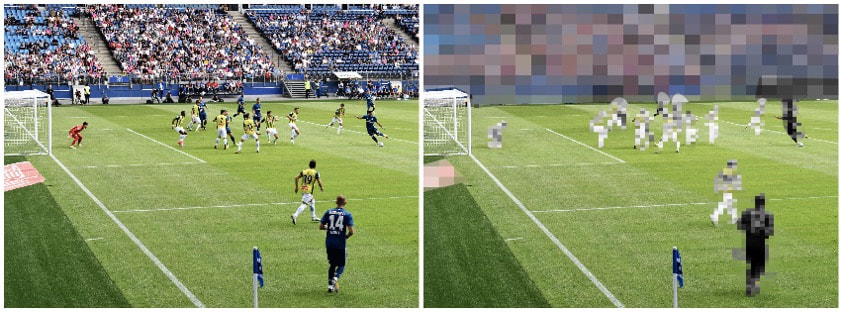
Participants rated video clips of elite women’s and men’s football players. A control group saw the original videos, in which the players’ gender was visible; a treatment group saw the same videos with gender obscured by blurring. Men’s videos were rated higher only when participants could see that the players were men. With gender blurred, ratings for women and men did not differ.
Read the paper
with Carlos Gomez-Gonzalez, Petr Parshakov and Helmut Dietl
Three natural field experiments on anti-Semitism in Italy. We emailed amateur football clubs, landlords and employers, using Jewish- and non-Jewish-sounding names, and compared the replies. We found significant discrimination when looking for a football club and an apartment, but not when looking for a job.
The three experiments: Housing market; Labor market; Social integration (football).
Read the paper
with Iuliia Naidenova, Petr Parshakov and Aleksei Chusovliankin
The annexation of Crimea created a political crisis in Russian–Ukrainian relations. Using a quasi-experimental design, we study whether it led to employee discrimination in the major sports leagues of both countries. Employment conditions worsened significantly after the crisis began.
Read the paper (free)